From Field to Fabric: How Organic Cotton Is Grown and Made
Cotton is one of the most familiar fabrics in our homes. It can be found in our curtains, cushions, upholstery, bedding, towels, clothes, and more – but have you ever stopped to think about the journey it takes before it reaches your home?
Cotton starts life in the field as a plant. It grows from seed, flowers in the sunshine, forms fluffy white bolls, then travels through many careful stages before it becomes fabric. But the way cotton is grown makes a real difference. Conventional cotton is one of the world’s dirtiest crops to grow, whereas organic cotton fabric follows a far gentler path.
To mark Great Big Green Week, we’re taking a closer look at how cotton is grown and made and why switching to organic is so important, so you can make more responsible choices about the fabrics you bring into your home.
What is organic cotton and why is it important?
Cotton may look soft and natural, but conventional cotton can be extremely demanding to grow. It relies on synthetic pesticides, fertilisers, and large amounts of water, all of which can affect the surrounding environment.
Organic cotton follows a much slower, more responsible path. It’s grown without the use of genetically modified seeds, hazardous synthetic pesticides, or fossil fuel-based fertilisers. Instead of relying on harsh chemicals, organic cotton farmers work with more natural growing methods like composting, crop rotation, and soil management.
The aim here is to grow cotton in a way that supports the land rather than exhausting it. Without pesticides or fertilisers, the soil is much healthier, allowing it to hold water more effectively, support biodiversity, and remain productive for future harvests. Sustainable cotton production also supports safer working conditions for farmers by reducing their exposure to hazardous chemicals during planting, growing, and harvesting.
How is organic cotton fabric grown and made?
1) Preparing the soil
Soil health is everything when growing organic cotton. Farmers start by enriching the land using natural methods such as composting and crop rotation, which helps to build fertility without harmful chemicals.
2) Planting the cotton seeds
The cotton seeds are then planted into warm soil. In organic farming, the seeds must not be genetically modified – instead, farmers focus on helping the crop grow in balance with the surrounding environment.
3) Growing the cotton plants
As the cotton plant develops, it produces flowers that eventually give way to seed pods (known as bolls). Farmers keep the plants healthy using natural methods such as crop rotation and hand weeding.
4) The bolls open
Soft cotton fibres grow around the seeds inside each boll. When the boll ripens, it splits open to reveal the fluffy white cotton, which is now ready to be harvested.
5) Harvesting the cotton
Once the cotton is ready, the farmers will harvest it from the plant using various methods, depending on where and how it has been grown. The aim here is to gather as much of the fibre as possible, while keeping it clean and undamaged.
6) Ginning the cotton
The harvested cotton then goes through a process called ginning, which separates the soft fibre from the seeds and any remaining plant matter. The cleaned cotton is then pressed into bales, ready for transporting and spinning.
7) Carding and combing
The cotton fibres are cleaned and aligned through a process called carding. Finer yarns may also be combed to remove shorter fibres, leaving behind longer, smoother fibres.
8) Spinning the yarn
The prepared fibres are then spun into yarn. They’re twisted together to create a continuous thread for weaving or knitting. The thickness and twist of the yarn will influence the fabric’s overall strength, feel, and appearance.
9) Weaving the cloth
Once it has been spun, the yarn is woven into fabric. At Vanessa Arbuthnott Fabrics, we combine certified organic cotton with eco-friendly flax to create our unique linen union fabric, blending the softness of cotton with the natural texture and strength of linen.
10) Printing and finishing
The woven cloth is then printed with the chosen design, before being finished and quality checked. At Vanessa Arbuthnott Fabrics, our fabrics can be purchased by the metre for your own home project, or transformed into made to measure curtains, blinds, cushions, quilts, and lampshades.
Looking for an eco-friendly fabric supplier?
“I care deeply about what I make and how it is made, from sourcing sustainable fabrics to supporting my local community” – Vanessa Arbuthnott
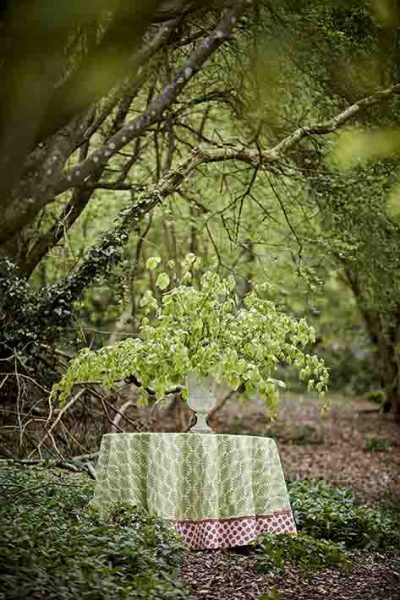
At Vanessa Arbuthnott Fabrics, we believe we’re the only company that uses truly sustainable upholstery fabrics. Plus, we’re passionate about supporting local craftspeople and reducing our environmental impact at every step.
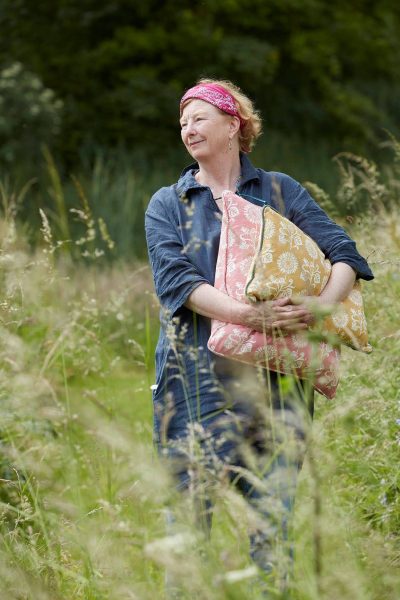
All of Vanessa’s designs are inspired by the Cotswold countryside and printed in the UK on our unique linen union fabric (a mix of organic cotton and eco-friendly flax) using sustainable processes. Small, dedicated workshops in the UK create all our products, of which the majority are made right here in the Cotswolds.
We’re mindful about our packaging, too. All our products are sent out using nearly 100% compostable packaging, recycled paper, and biodegradable cardboard. We only use renewable energy at our Cirencester HQ and are very conscious of our wastage.
So, if you want to refresh your home with new fabrics in a way that won’t harm the environment, we’ve got the perfect collection for you. Browse our range of eco-friendly fabrics to find your new favourite design.
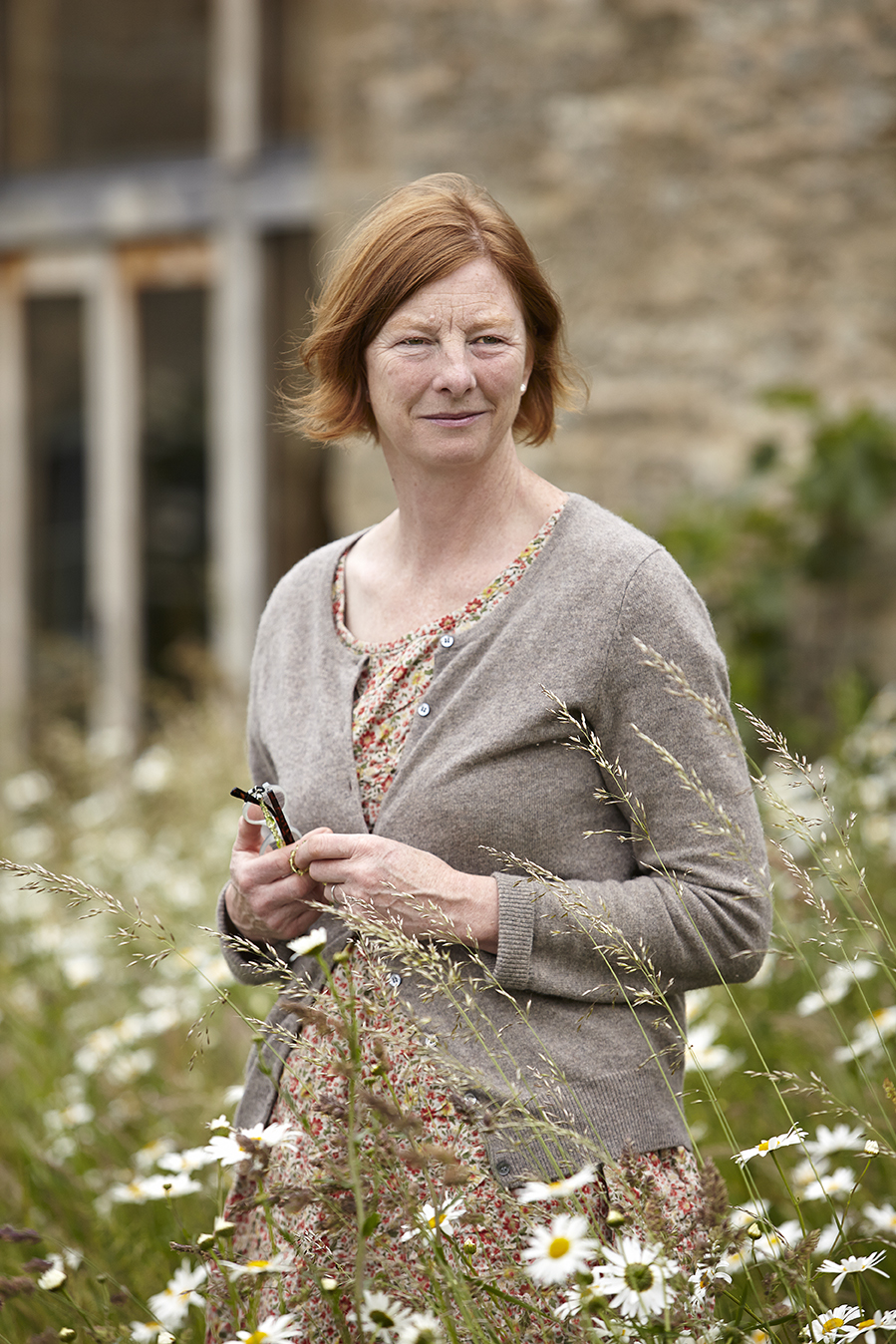
We sell fabrics exclusively designed by Vanessa Arbuthnott, along side small, bespoke collection of Made to Measure items which includes curtains, blinds, sofas, footstools, chairs, headboards, and quilts, all handmade specially for you by master crafts people.