
How to Style Your Home with Block Printed Fabrics
Did you know that no two repeats in block printed fabric are ever completely identical? Traditional block printing is done by hand, with tiny variations in pressure, placement, and colour occurring naturally throughout the process. It’s these subtle irregularities that give block printed fabrics their distinctive character and charm – bringing warmth, texture, and a sense of craftsmanship to any room in a way that mass-produced prints simply can’t match.
Below, we explore the history of this enduring textile tradition, and share our top styling tips to help you use block printed fabrics throughout your home.
A short history of block printing on textiles
Block printing on textiles is one of the oldest ways of decorating cloth. Over 2,000 years ago, craftspeople in India, China, and many parts of Asia began using carved wooden blocks to press repeated patterns onto cotton, linen, and silk. Over time, these textiles found their way to Europe, where they became loved for their rich colours and detailed designs.
Traditional hand-block printing is a slow and skilled process. A design is carved into a wooden block, before being dipped in dye and pressed onto fabric by hand. More detailed patterns may need several blocks, with each colour applied separately. The maker will line up every repeat by eye and gradually build the design across the cloth.
This handmade approach is what gives block printed textiles their enduring appeal. Small variations in colour, placement, and pressure are all part of the charm, making each length of fabric unique.
How to style block printed fabrics in every room
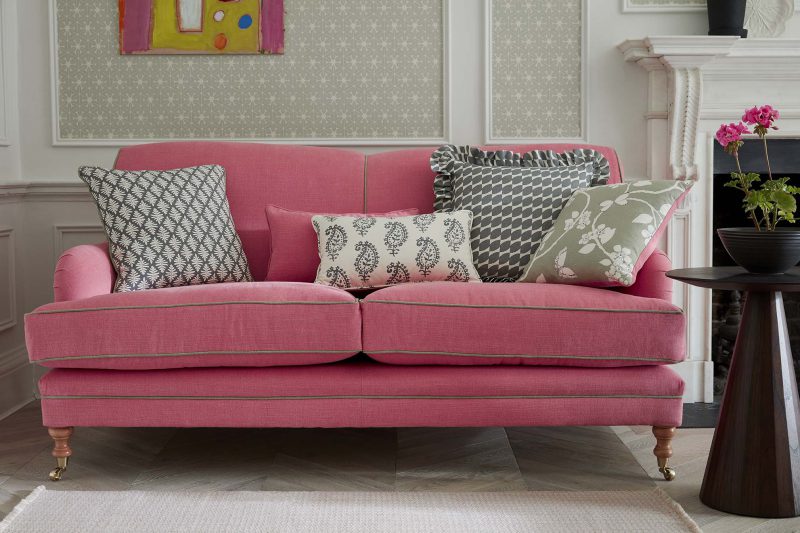
Living room
You can afford to be much more generous with pattern in your living room, as this is where the majority of your soft furnishings naturally gather. Block printed patterns are perfect here, helping to create a layered and welcoming space that feels collected over time rather than coordinated.
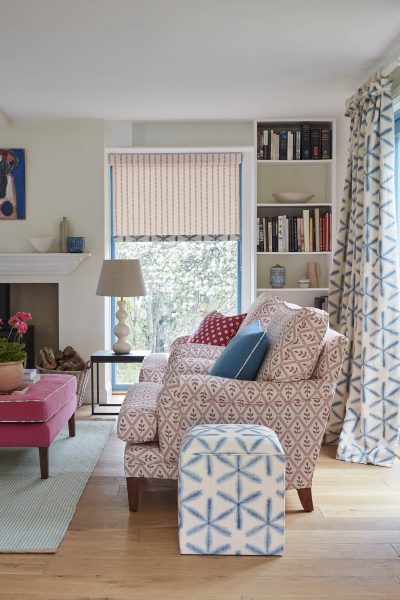
You could hang made to measure curtains in a hand-printed fabric, like Japonica in Indigo, to frame your window and the views beyond. You could then introduce smaller prints, like Simple Ticking Detail in Cornflower, through cushions across your sofa or armchair. Cushions are actually one of the best places to start if you’re new to pattern, providing the perfect opportunity to experiment with mixing fabrics.
Top tip: Don’t be afraid to mix and match patterns in your living room. The secret is to choose colours that complement one another, rather than matching everything perfectly.
Bedroom
Block printed fabrics are especially lovely in bedrooms as they help to bring softness and detail without making the room feel too busy. This is a space where you want the patterns to feel gentle and restful, so opt for smaller-scale designs that add texture and warmth.
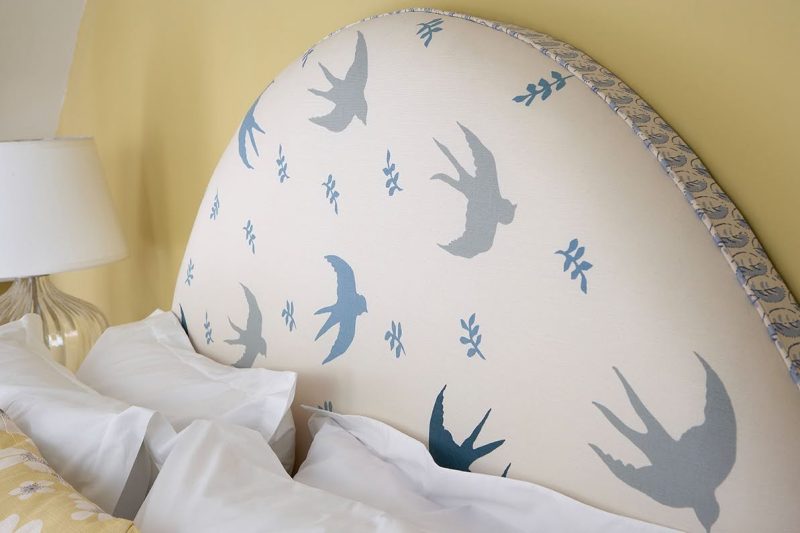
You could choose a made to measure Roman blind in Little Fern to bring a delicate, nature-inspired touch to your window, then add a pair of handcrafted lampshades in Life and Eternity Detail for a more decorative note. You could consider block printed upholstery fabrics, too – a pattern like Up in the Air works beautifully for headboards or as a small upholstered chair beside your bed.
Top tip: Keep the largest surfaces in your bedroom calm and use decorative block printed fabrics to add detail in carefully chosen areas, such as the window or a headboard.
Kitchen and dining room
Our kitchens and dining rooms are more practical spaces, with harder surfaces such as timber, stones, tiles, and painted cabinetry. Block printed fabrics help to soften the overall feeling of the room, adding visual interest without competing with your open shelving, crockery, or tableware.
One of the easiest places to start is with seat pads or bench cushions. A block printed pattern like Simple Ticking Detail in Terracotta works beautifully for cushions, especially in a warm country kitchen with natural wood or cream-painted cupboards. And if you want to bring in a softer leafy pattern, our Wild Fern design in Peach makes for the perfect roller blind or lampshade pairing.
Top tip: Repeat your chosen block print in two or three places around the room to create a sense of cohesion without making it look too matchy-matchy.
Hallways, studies, and smaller corners
Hallways, studies, boot rooms, and landings are the perfect places to introduce block printed fabrics without needing to design a full room scheme around them. These spaces are often overlooked, so a couple of patterns here and there can make them feel much more considered.
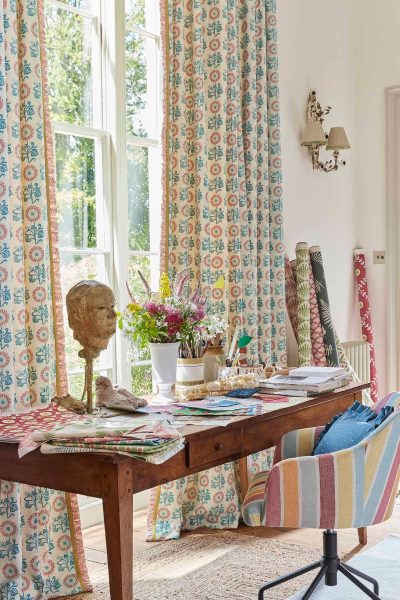
You could use a pattern like Little Fern for your hallway blind or a boot room cushion to create a gentle link to the countryside outside. Or, if you want to add a little vibrancy to your study, consider hanging some curtains in our Sunflower Detail lino print fabric – this design is perfect for bringing personality to your space without overwhelming it. Pair it with a fun upholstered desk chair with a plainer cushion to tie the whole scheme together.
Top tip: If you’ve found a block printed fabric you love but don’t feel ready to commit to it in a larger room, introduce it in your hallway or landing first.
Bring the beauty of block printing into your home
At Vanessa Arbuthnott Fabrics, we offer a fantastic selection of block printed fabrics that pay homage to traditional printing techniques, including traditional hand-block printing and potato printing. We work with talented local craftspeople who embrace this slower way of working, helping to turn Vanessa’s initial sketches into our beautiful rolls of fabric and made to measure products.
Not sure where to get started? Order up to five free fabric samples to see which designs look best in your space. And if you need a little help choosing the right block printed fabric for your home, feel free to book a complimentary design consultation with our in-house interior designer, Tania.
FAQs
What are the different block printing techniques?
There are several different types of block printing techniques. Traditional hand-block printing involves carving a design onto a wooden block, applying dye or ink to the raised surface, and then pressing it onto the cloth to build up a repeating pattern. Lino printing follows a similar idea, with the design being cut into linoleum rather than wood. Potato printing is actually the simplest version of block printing, which involves cutting a shape into a potato and then pressing it onto paper or fabric.
Are block printed fabrics durable?
Yes, block printed fabrics can be very durable, especially when they’re printed on good-quality natural cloth. At Vanessa Arbuthnott Fabrics, our hand printed and block printed designs are designed to last for many years, making them suitable for curtains, blinds, curtains, lampshades, and upholstery. We recommend following your fabric’s specific care instructions to help it look lovely for years to come.
How do you care for block printed textiles?
When caring for block printed textiles, make sure you check the specific care instructions for your chosen fabric before you begin cleaning. As a general rule of thumb, you should gently vacuum curtains and upholstery with a small brush attachment, blot any small marks instead of rubbing them, and keep your fabrics out of strong direct sunlight wherever possible. If you’re unsure, we recommend seeking professional cleaning.
We sell fabrics exclusively designed by Vanessa Arbuthnott, along side small, bespoke collection of Made to Measure items which includes curtains, blinds, sofas, footstools, chairs, headboards, and quilts, all handmade specially for you by master crafts people.