A Love Letter to Nature’s Smallest Heroes on World Bee Day
Think of the simple pleasures that make your home feel alive in the summer: flowers gathered on your kitchen table, fruit ripening in your garden, and birdsong drifting through your open windows. So many of these joys begin with bees; without them, our gardens, kitchens, and hedgerows would be far less abundant.
This is why World Bee Day is such an important day. Celebrated annually on 20th May, it provides a key opportunity to honour the bees, butterflies, and other pollinating insects that help our countryside flourish, and to think about how we can better care for them.
Vanessa takes inspiration for her fabrics and colour palettes from the natural world surrounding her rural Cotswold home, from flowers and ferns to meadow plants and wildlife. This World Bee Day, we’re celebrating the pollinators that keep our countryside thriving, and sharing some easy ways to welcome them into your own garden.
Understanding World Bee Day and why bees matter so much
World Bee Day is celebrated each year on 20th May to recognise the vital role that bees and other pollinators play in our ecosystems, food systems, and the natural world as a whole. Bees pollinate flowers, fruit trees, vegetables, and wild plants, which allows them to set seed and fruit. Their work helps to support healthy gardens, hedgerows, and the wider biodiversity that so much of our wildlife depends on.
Unfortunately, bees are under pressure from habitat loss, climate change, pesticides, and the decline of wildflower-rich spaces. The places where they feed, nest, and shelter are becoming fewer, which makes bees more vulnerable to hunger and disease. This also means that the gardens, crops, and wild plants that depend on them are affected by reduced pollination and declining biodiversity.
The World Bee Day theme for 2026 is “bee together for people and the planet”, which focuses on how humans and bees have long worked together to nourish both people and the environment. It’s a reminder that caring for bees is a shared responsibility, and we all have a part to play in ensuring they continue to thrive.
Vanessa’s love of nature and the environment
Vaness’s love of flora and fauna can be seen across many of her most treasured designs. Here are just a few examples:
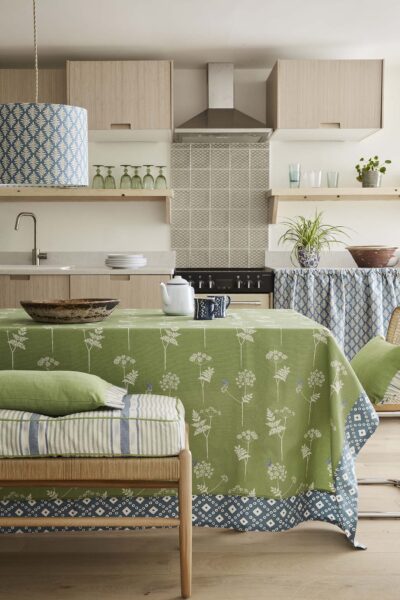
- Cow Parsley, one of Vanessa’s bestselling designs, captures the frothy white blooms that are found along country lanes and field edges in early summer. It’s an important early source of pollen for bees and hoverflies, and a nectar plant for butterflies.
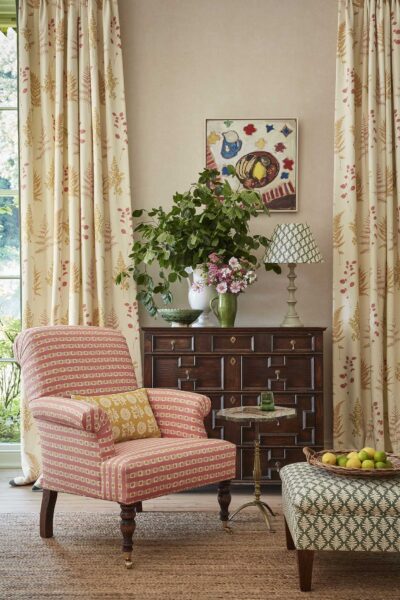
- Fine Foliage was inspired by bracken, hornbeam, ferns, and wild grasses that Vanessa gathered on a walk around Coniston Water. She picked, pressed, and scanned these plants directly to create this beautiful airy pattern.
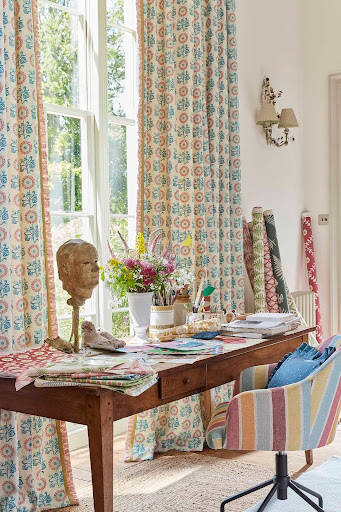
- Sunflower and Sunflower Detail celebrate one of summer’s most important flowers. It’s loved by honeybees and bumblebees for its nectar, and by wild birds later in the year for its seeds.
- Song Birds and Flora & Fauna, from our Meadow collection, feature all the elements that Vanessa admires in the fields surrounding her Cotswold home: foliage, blossom, butterflies, and birds.
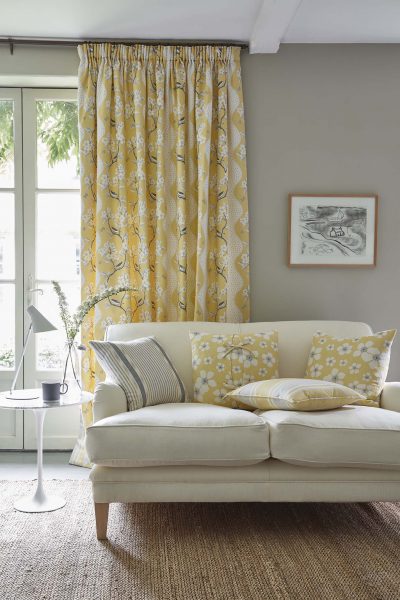
- The Wild Garden collection is a message on the power of rewilding our countryside. It depicts the plants that give sustenance to bees and butterflies, and celebrates the value of letting corners of our gardens go wild to create a haven for insects and birds.
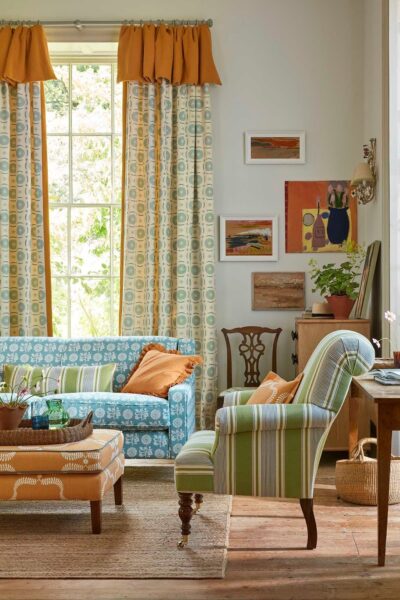
As well as inspiring Vanessa’s designs, this respect for nature is woven into the way that we work. We offer a unique linen union fabric that combines organic cotton with eco-friendly flax, and we only partner with ethical suppliers to produce our fabrics. Our made to measure pieces are made by local craftspeople who use traditional methods and take real pride in their work. And at our Cirencester HQ, we’re committed to using (nearly) 100% compostable packaging, recycled paper, and renewable energy.
You can read more about our environment ethos and goals for the future on our sustainability page.
How you can help nature’s smallest heroes this World Bee Day
World Bee Day provides a key opportunity to think about the small choices we can all make, at home and in our gardens, to support these wonderful pollinators. You don’t need a large garden to make a difference – introducing a few pots on your patio or a patch of herbs outside your back door can help to create bee-friendly gardens that feed and shelter nature’s smallest heroes.
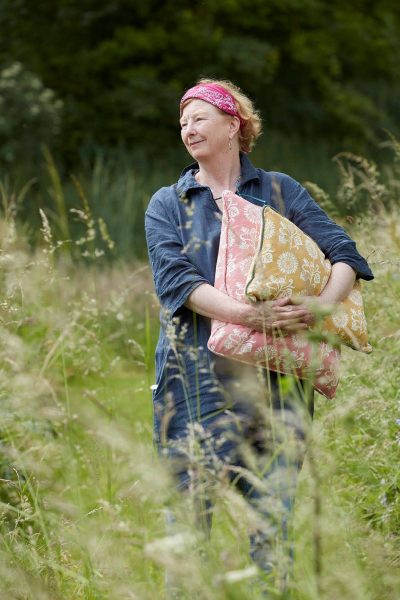
Here are some easy sustainable garden practices you can try at home:
- Plant pollinator-friendly plants such as lavender, marigolds, sunflowers, herbs, native wildflowers, and fruit trees.
- Let a corner of your garden grow wild, with long grass and wildflowers to provide food and shelter for pollinators.
- Plant hedgerows where possible to create safe corridors and nesting places for wildlife.
- Reduce the use of harmful chemical-based pesticides and instead opt for safer, natural alternatives.
- Buy local honey and bee products to support our local beekeepers.
- Purchase organic and sustainable food where possible to support farming practices that are kinder to pollinators.
And if you’re looking to bring that same respect for nature indoors, why not fill your interiors with our beautiful eco-friendly fabrics? Browse our World Bee Day collection to celebrate the beauty of pollinators in your own home.
FAQs
What is World Bee Day?
World Bee Day is an annual awareness day that’s held on 20th May each year. Its primary goal is to celebrate bees and other pollinators, and to highlight their importance to ecosystems, food production, and biodiversity.
Why are bees important for gardens?
Bees are so important for gardens as they help to pollinate flowers, fruit trees, vegetables, and wild plants. This enables the plant to produce seeds and fruit, in turn providing food and habitats for other wildlife.
How can I create a bee-friendly garden?
To create a bee-friendly garden, try planting nectar-rich flowers such as lavender, marigolds, sunflowers, and native wildflowers. Avoid harmful chemicals, leave some areas to grow a little wild, and provide shelter to wildlife with hedgerows, long grass, or log piles.
What are the best pollinator-friendly plants?
The best pollinator-friendly plants include lavender, marigolds, sunflowers, foxgloves, herbs such as thyme and rosemary, fruit trees, and native wildflowers such as cow parsley.
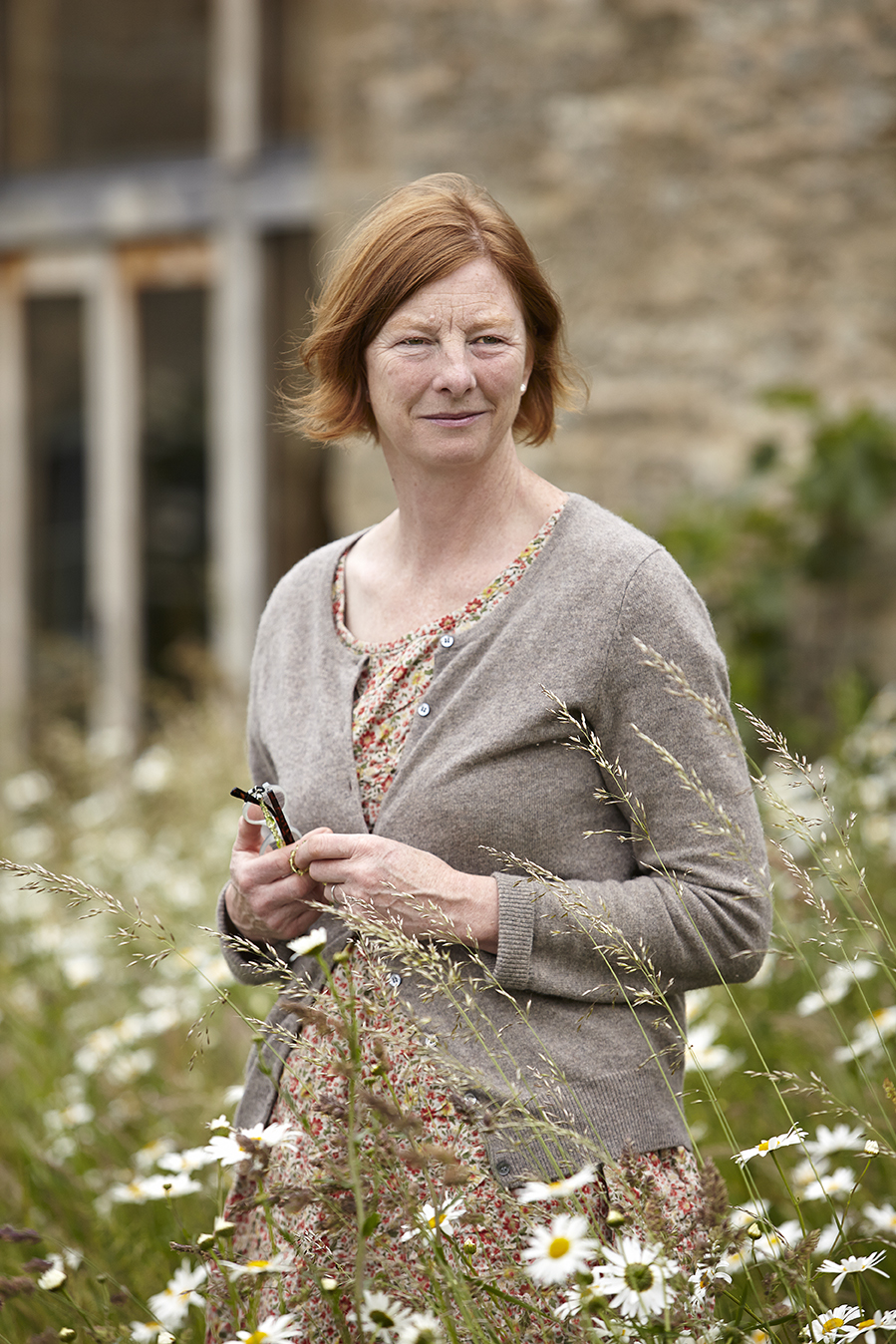
We sell fabrics exclusively designed by Vanessa Arbuthnott, along side small, bespoke collection of Made to Measure items which includes curtains, blinds, sofas, footstools, chairs, headboards, and quilts, all handmade specially for you by master crafts people.